Protecting a thriving
lobster fishery
for generations to come
Through collaboration with fishermen, scientists, educators, and communities, GOMLF is dedicated to protecting and sustaining a healthy lobster fishery and marine environment in the Gulf of Maine.
Lobster Lines — Fall 2026 Edition
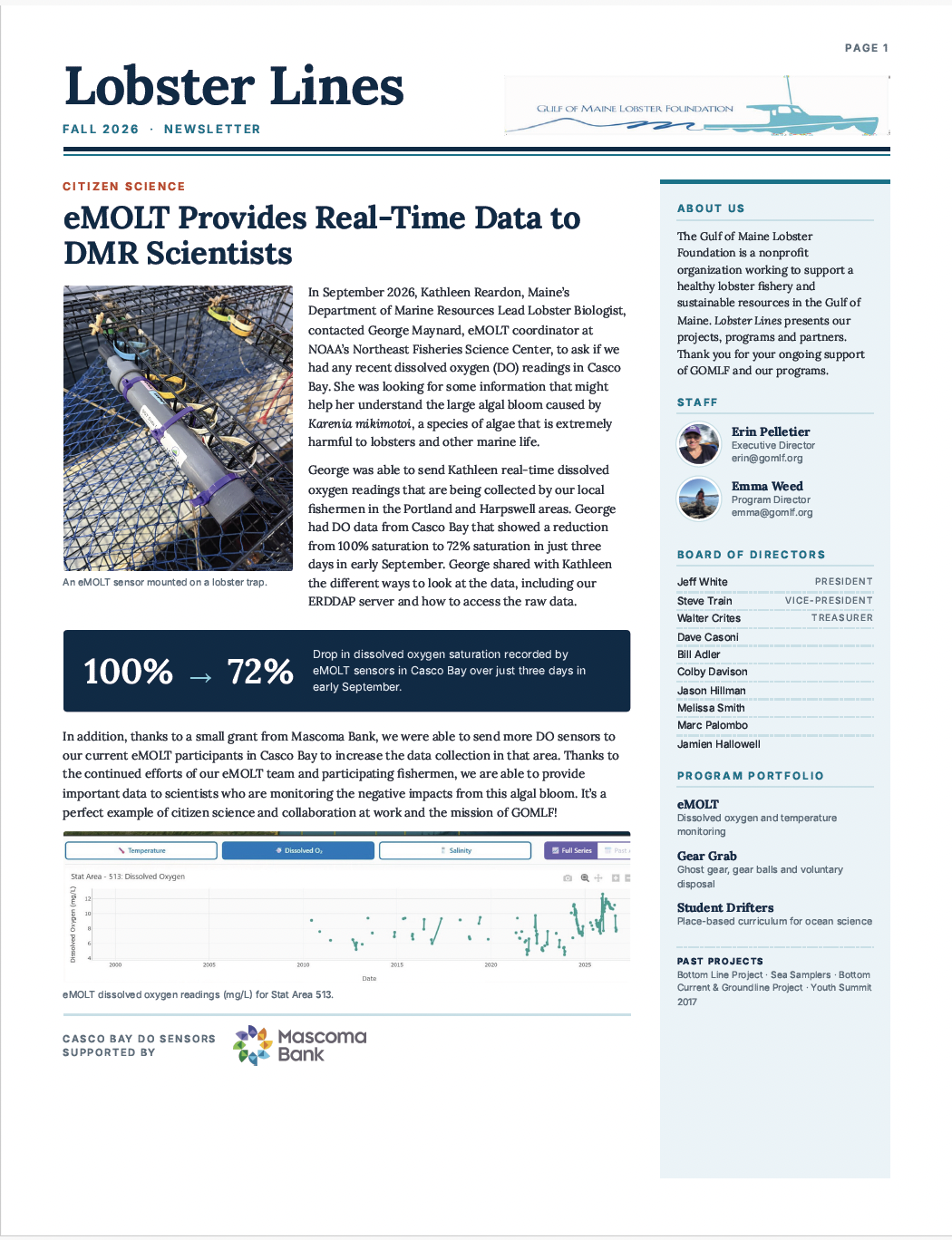
Our latest issue covers eMOLT network expansion and real-time data during the Casco Bay algal bloom, Gear Grab recovery highlights, Student Drifter updates from the 2025–26 school year, GOMLF's presentation at ICWL 2026 in Mallorca, and news from our partners at NOAA, NERACOOS, and across the Gulf of Maine.
In the News
GOMLF Presents Gear Grab at International Lobster Conference in Mallorca
In October 2026, Erin Pelletier and Emma Weed traveled to Cala Ratjada, Mallorca for ICWL 2026 — 130 attendees from 17 countries. Emma presented on ghost gear collaboration in the Maine lobster fishery and made connections from Mexico to Norway and Australia.
Read in Lobster Lines →eMOLT Sensors Provide Real-Time Dissolved Oxygen Data During Casco Bay Algal Bloom
Maine DMR's lead lobster biologist contacted GOMLF for dissolved oxygen data amid a Karenia mikimotoi bloom. eMOLT sensors recorded a drop from 100% to 72% DO saturation in just three days — directly informing scientists monitoring the event.
Read in Lobster Lines →UNE Student Drifter Travels to Nova Scotia — Recovered and Redeployed by Local Fishermen
UNE students launched drifters off Saco Bay to compare surface currents to NASA SWOT satellite data. One drifter reached Nova Scotia, where the crew of FV L&J Swell Ride recovered it, learned about the science, and redeployed it. It's still transmitting.
Read in Lobster Lines →New England Fishermen Are Collecting Crucial Ocean Data
The New York Times Climate desk profiled how New England fishermen are gathering real-time ocean temperature and current data through programs like GOMLF's eMOLT initiative, filling critical gaps in scientific understanding of a rapidly warming Gulf of Maine.
Read on NYTimes.com →New England Gear Team Wraps Up Three Years of Regional Work
GOMLF and the New England Gear Team concluded three years of work: ~30,000 traps recycled, 69 fishermen hired, nearly 2M lbs removed in Maine alone — part of 4M+ lbs removed or diverted across all GOMLF programs. 18 boats, 6 ports, 37 jobs created in Maine.
See the Regional Gear Hub →Ghost gear hunting: A Boothbay Harbor fisherman joins the effort
A local fisherman began working with GOMLF in 2025 on ghost gear removal, illustrating how the program continues to expand its community partnerships along the coast.
Read Article →These divers are trying to make a dent in Maine's 'ghost gear' problem
WBUR reports on efforts to recover abandoned lobster traps, featuring GOMLF's Gear Grab program and the ongoing challenge of ghost gear threatening marine ecosystems.
Read Article →BIL Funds Awarded for New Regional Ghost Gear Coalition
The Center for Coastal Studies received $2.7M to partner with GOMLF and others in a regional coalition addressing lost and abandoned fishing gear in New England waters.
Read Article →Despite the cold, lobstermen bringing up the ghosts
A feature on winter ghost gear recovery efforts by Maine lobstermen working alongside GOMLF, with firsthand accounts from boat captains volunteering in the cold months.
Read Article →Gear Grab: Recovering lost lobster traps
An in-depth look at GOMLF's at-sea gear recovery operations, featuring fishermen volunteering vessels to grapple for lost traps in designated areas along the Maine coast.
Read Article →How One Partnership Addressed the Life Cycle of Lost Fishing Gear in the Gulf of Maine
NOAA's Marine Debris blog covers the GEAR Team coalition led by the Center for Coastal Studies and including GOMLF — from planning through on-the-water operations.
Read Feature →Partnering with the fishing industry to monitor the Northeast Shelf
NOAA's official eMOLT feature — how commercial fishermen from Maine to Maryland collect real-time bottom temperature data that feeds directly into ocean forecast models.
Read Feature →Scientists and Fishing Industry Join Forces for Better Data and Management
A NOAA feature spotlighting how fishermen-scientist partnerships like eMOLT are improving 72-hour ocean forecast models and transforming how the Northeast Shelf is monitored.
Read Feature →Working with partners to remove lost gear from Maine waters
World Animal Protection highlights GOMLF's collaboration to remove lost and abandoned fishing gear from Maine's ocean floor and the impact ghost gear has on marine wildlife.
Read Article →Gear grab gives Maine fishermen the chance to 'do the right thing' for free
GOMLF held a two-day event at Portland Fish Pier for fishermen to dispose of old lobster gear at no cost, while also organizing crews to troll for lost traps with grappling hooks offshore.
Read Article →Local and National NGOs Partner to Remove 5,000-Pound Gear Ball from Gulf of Maine
GOMLF joined the Global Ghost Gear Initiative and Ocean Conservancy to recover a massive 5,000-pound ball of tangled traps, rope, and debris from the Gulf of Maine seafloor.
Read Release →Concerned Citizens and Fishermen Help Scientists Track Ocean Changes
WBUR covers the eMOLT citizen science model — how lobstermen partnering with NOAA are building one of the most comprehensive pictures of Gulf of Maine ocean temperature change available anywhere.
Read Article →Citizen scientists on the seaboard: How lobstermen gather data from the bottom of the ocean
A national feature on the eMOLT program and NOAA oceanographer Jim Manning — how lobstermen across the Northeast attach low-cost sensors to traps and transmit real-time bottom data to scientists.
Read Article →Lobster traps and drifters monitoring the sea
An early feature on GOMLF's dual monitoring approach — using fixed lobster trap sensors alongside drifting buoys to build a comprehensive picture of Gulf of Maine oceanographic conditions.
Read Article →Hundreds of 'ghost' lobster traps recovered off MDI
GOMLF recovered approximately 400 ghost traps off Mount Desert Island in a two-day effort funded by a $200,000 grant from the National Fish and Wildlife Foundation — an early milestone for the Gear Grab program.
Read Article →eMOLT Workshop brings together lobstermen and data experts
A recap of the eMOLT stakeholder workshop convened by GOMLF and NERACOOS, where fishermen, oceanographers, and modelers discussed data needs, ocean forecasting, and monitoring expansion.
Read Recap →Science and fishermen, working side by side
In response to the growing demand for improved lobster science and the need to establish long-term data sets, members of the Maine lobster industry established the Gulf of Maine Lobster Foundation (GOMLF) in 2000. For the past twenty-five years, GOMLF has managed and administered over 20 projects geared toward improving the science, management, and sustainability of the resource.
With a Board of Directors comprised primarily of lobstermen and a direct line to fishermen willing to collaborate, GOMLF is able to communicate directly with the lobster industry on issues they face every season. Projects such as eMOLT have been running for over fifteen years with lobstermen still using the same trap-mounted sensors at their original sites. GOMLF has also collected over 2 million pounds of floating groundlines to help fishermen comply with federal regulations.
GOMLF is a 501(c)(3) non-profit based in Kennebunk, Maine. We conduct vessel-based fieldwork, encourage good stewardship, and provide outreach and education on the marine environment across New England.
Vessel-Based Science
Real ocean data from working commercial boats across the Gulf of Maine.
Industry Collaboration
Fishermen as essential partners, not merely subjects of study.
Marine Stewardship
Protecting the broader ecosystem through gear recovery and habitat work.
Education & Outreach
Bringing ocean science into classrooms and coastal communities.


Three ways we protect the fishery
Each program addresses a different dimension of sustainable lobster fishing — from real-time ocean monitoring, to ghost gear recovery, to student ocean science education.
eMOLT
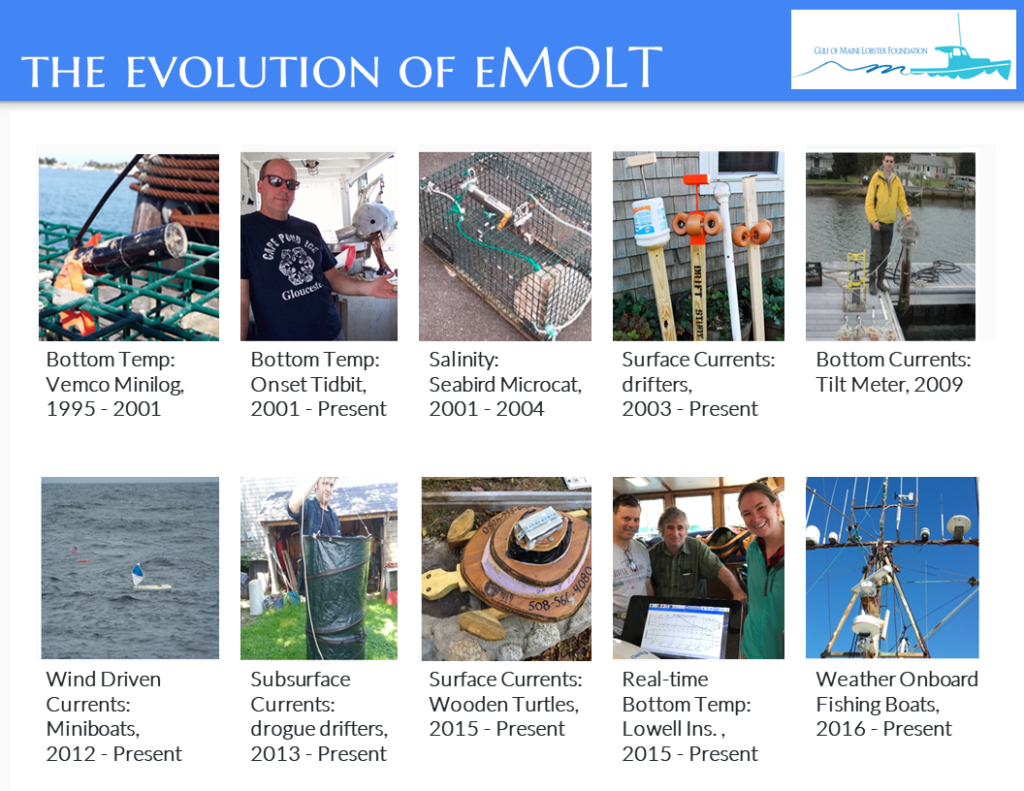
The Gulf of Maine Lobster Foundation has supported the Environmental Monitoring on Lobster Traps (eMOLT) project since 2003. eMOLT is a not-for-profit collaboration of industry, science, and academics devoted to monitoring the physical environment of the Gulf of Maine and Southern New England shelf.
In a series of phases funded by the Northeast Consortium beginning in 2001, GOMLF developed low-cost strategies to measure bottom temperature, salinity, and current velocity with the help of nearly 100 lobstermen along the entire New England coast. The program now has over 200 vessels sending bottom temperatures in real-time, with partner vessels spanning the coast from Cutler, Maine to Ocean City, Maryland. Well over 8,200 hauls have been reported to date.
Research has shown that bottom temperatures in the Gulf of Maine have been rising 0.10°C per year from 2001 through 2021. The primary objective is to assimilate the data into numerical ocean models — much the same way the National Weather Service uses air temperature observations on land for weather forecasting. Current funding comes from Maine Sea Grant and MassTech.
How It Works
Wireless Probe on the Trap
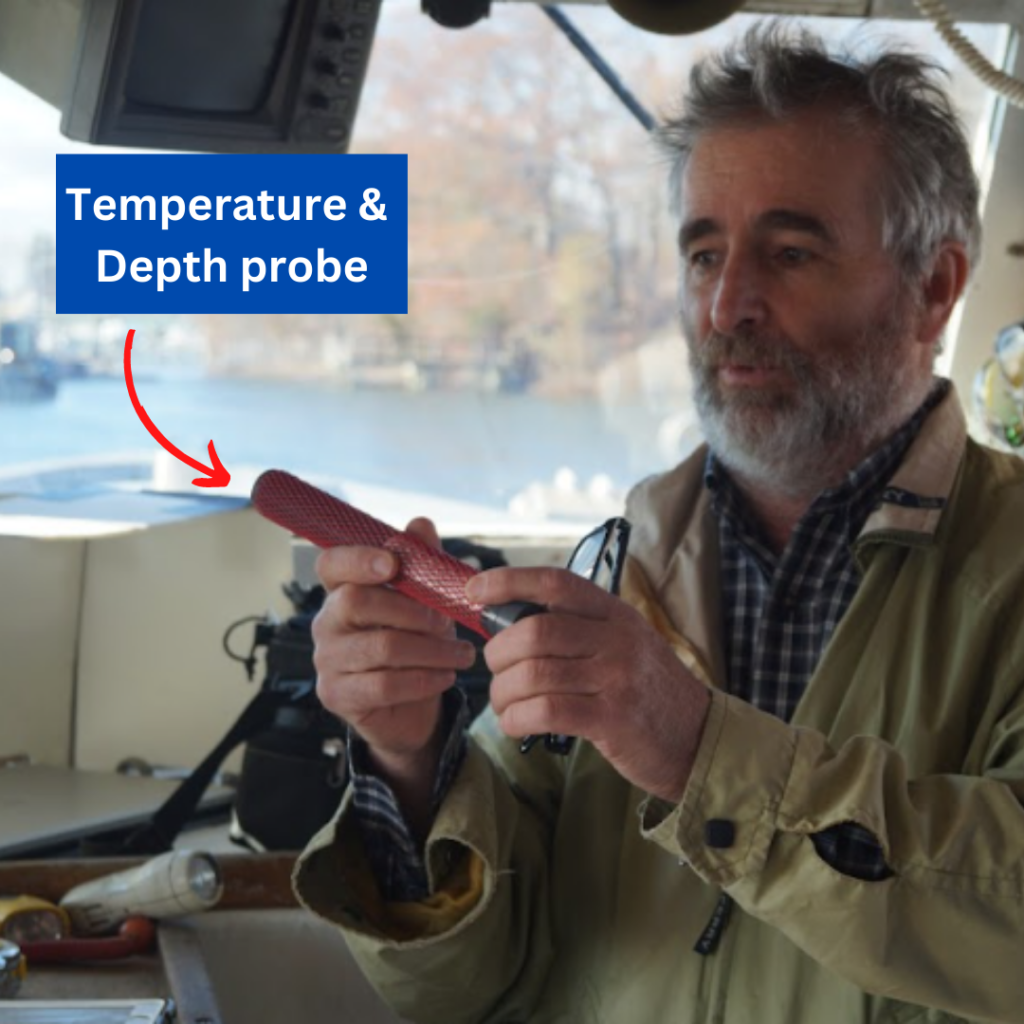
A foot-long temperature and depth probe is secured to the trap doors inside PVC pipe. It records data every minute for up to six months on one battery charge.
Automatic Bluetooth Download
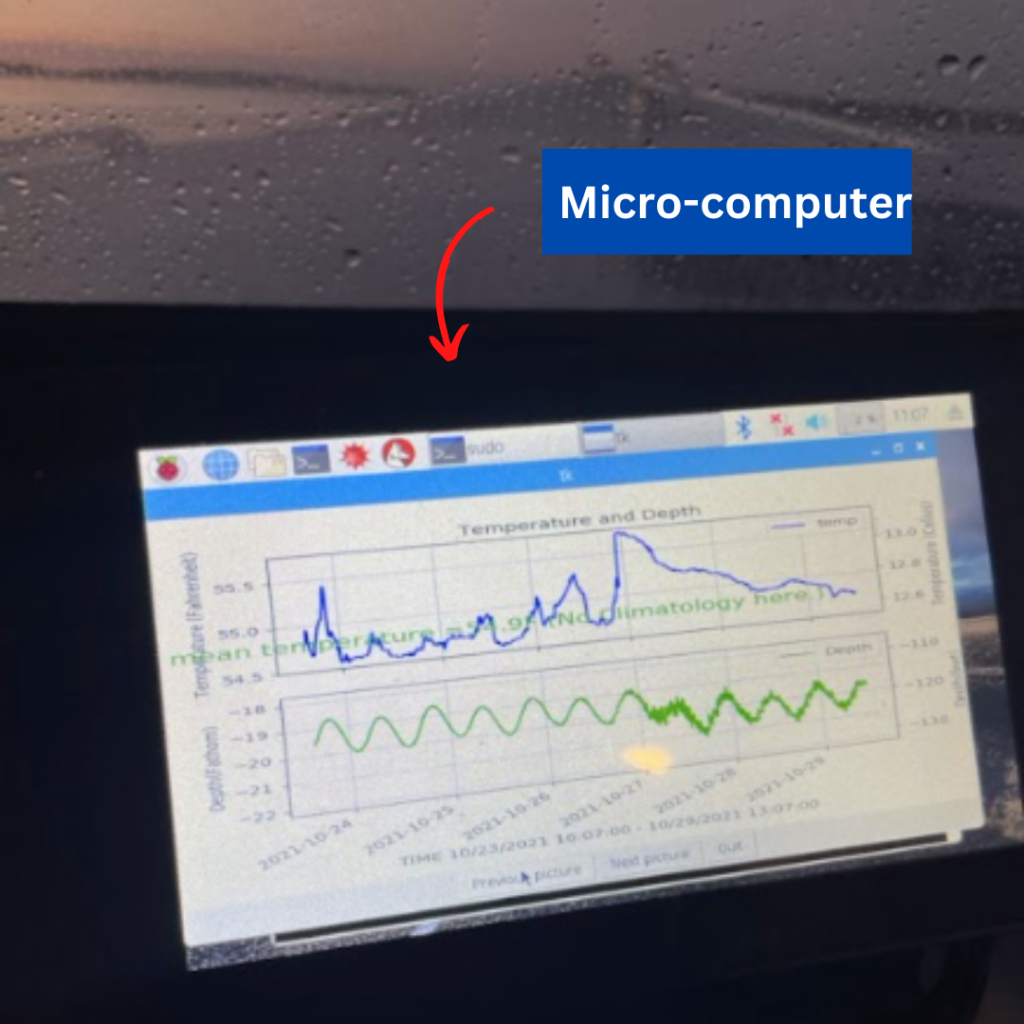
As the probe surfaces on deck, a 7" wheelhouse micro-computer downloads data automatically via Bluetooth, plots results, and compares to historical records — no action required from the captain.
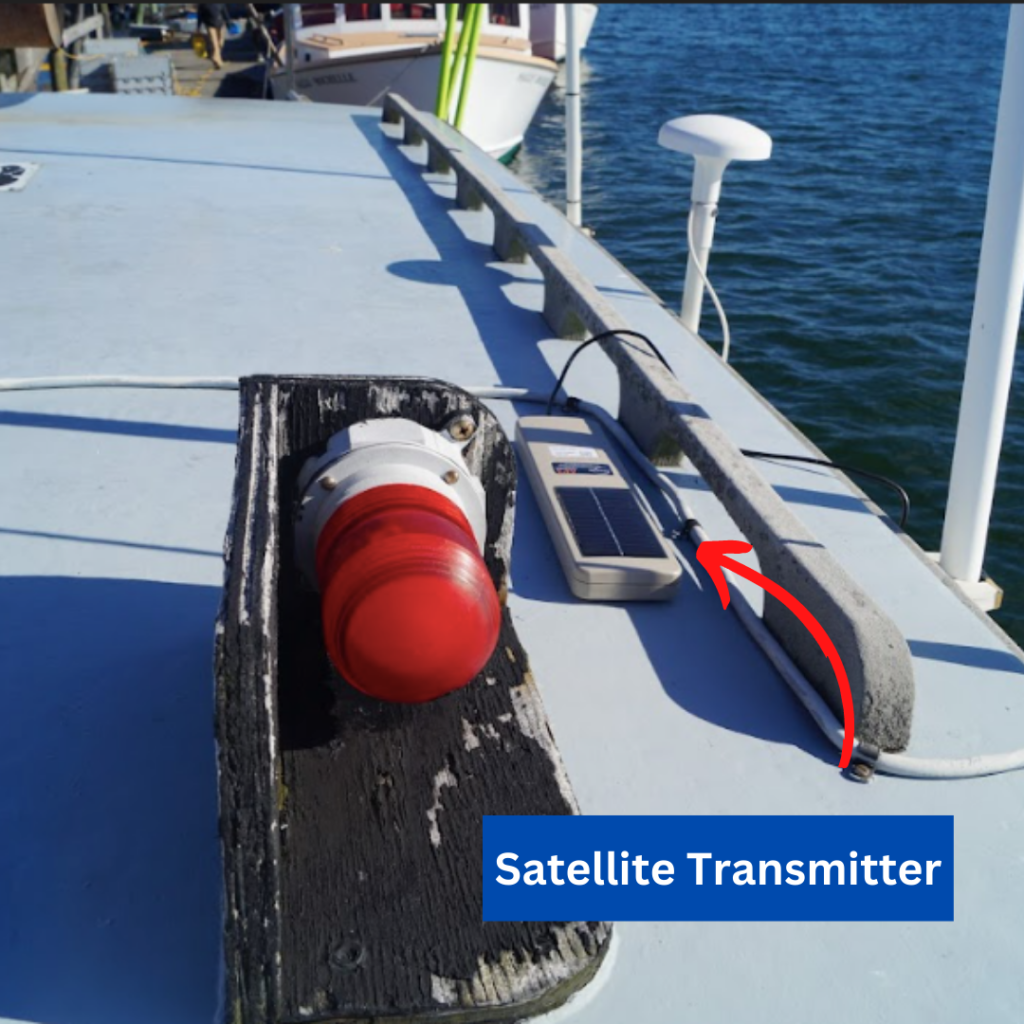
Satellite Transmission
Each haul's statistics — position, temperature, depth — are transmitted via satellite to an online map, pinned to 10-mile squares and visible to scientists in real time.
Into NOAA Ocean Forecasts
Scientists at NOAA assimilate the bottom temperatures into ocean forecast models, improving predictions across the entire Gulf of Maine ecosystem — benefiting the whole fleet.


Gear Grab
Studies estimate that 175,000 lobster traps are lost in the Gulf of Maine every year — enough to cover the equivalent of 24 football fields. Between loss of revenue and the cost of replacement gear, derelict fishing gear causes over $16 million in annual losses to the lobster industry. Ghost gear is not biodegradable and continues fishing long after it is lost, trapping marine life and fouling critical habitat.
GOMLF developed the three-pronged Gear Grab initiative to engage lobstermen, divers, students, youth organizations, community members, and local businesses in addressing the economic and environmental impact of ghost gear. GOMLF is the only organization to conduct Gear Ball Retrieval work in the Gulf of Maine. Across all GOMLF programs to date — Gear Grab, Bottom Line, and beyond — over 4 million pounds of debris have been removed or diverted from the Gulf of Maine.
Primary funders include the National Fish and Wildlife Foundation Fishing for Energy Program and the NOAA Marine Debris Program, augmented by individual and corporate donations.
Three-Pronged Approach
At-Sea Recovery
Fishermen volunteer vessels and crew to grapple for lost traps. Salvageable traps are returned to owners; unusable traps are crushed and steel is recycled — proceeds reinvested in the program.
Gear Collection & Recycling
Fishermen dispose of old or unwanted gear at designated collection sites at no cost. Wire traps, buoys, warp, and nets are fully recycled or repurposed at waste-to-energy facilities.
Community Shoreline Cleanup
Fishermen lead families, students, and businesses in taking ownership of their stretch of the Maine coast — removing gear and debris from shorelines, beaches, and shallows.
Student Drifters
Student Drifters is an educational program for formal and informal learning environments. Students build GPS-tracked ocean drifters from scratch, deploy them into the Gulf of Maine, and then follow their journey online in real time as ocean currents carry them along the coast and beyond.
Data contributes directly to the U.S. Integrated Ocean Observing System and is used by numerical modelers to validate their simulations. Educators can address multiple STEM disciplines and customize lesson plans from basic concepts of latitude and longitude to complex studies of ocean dispersion and current modeling.
A single drifter costs approximately $1,000 pre-built and can typically be deployed multiple times, lasting up to a year in the ocean. More information is available at StudentDrifters.org.
Program Features
STEM Education
Addresses Science, Technology, Engineering, and Math from basic navigation to complex dispersion studies.
Real-World Science
Data contributed to the US IOOS and used by ocean modelers to validate Gulf of Maine simulations.
Design & Build
Students participate in the full engineering process — building something functional from scratch.
Cost & Access
~$1,000 per drifter, pre-built. Reusable up to a year in the ocean. Contact us for school pricing.
Get Started — 4 Steps


Past Projects
Over 25 years, GOMLF has managed more than 20 projects to improve the science, management, and sustainability of the lobster fishery. A selection of completed initiatives:


Bottom Line Project
GOMLF managed collection of floating groundlines from hundreds of fishermen along the Maine coast. Over 2 million pounds of rope were collected — 100% recycled and repurposed, including by artists who made doormats from the recovered line. NOAA funded the project and GOMLF provided vouchers covering costs of required sinking replacement rope.

Sea Samplers
GOMLF worked with the Maine DMR to place trained observers aboard commercial lobster boats. From the first trap to the last, samplers measured each lobster and noted sex, cull status, v-notch condition, egg development stage, molt status, and finfish bycatch — providing critical data from a fisherman's daily perspective.

Youth Summit
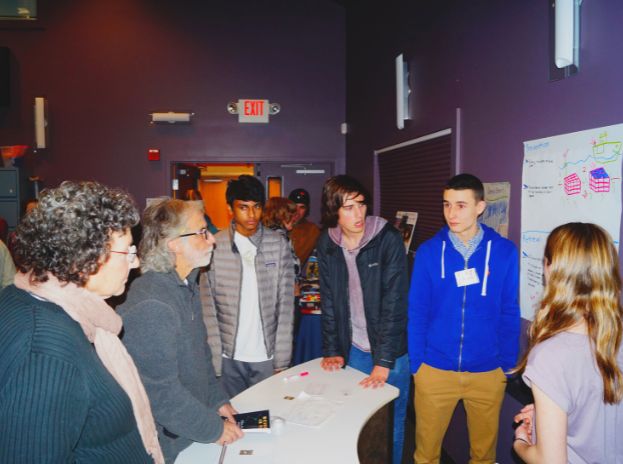
Funded by the NOAA Marine Debris Program, GOMLF hosted an afternoon workshop for young people to discuss preventing and removing marine debris. Participants explored types and sources of debris, how it moves through the watershed, its impact on ecosystems, and designed solutions to reduce debris in the Gulf of Maine.
Maine Fishermen Ghost Gear Surveys
In 2023, Emma Weed conducted 147 surveys of Maine fishermen on behalf of the Food and Agriculture Organization of the United Nations (FAO) and the Global Ghost Gear Initiative (GGGI) — her first contracted work with GOMLF. The survey data contributed to a landmark FAO global assessment of lost and abandoned fishing gear, one of the most comprehensive international studies of its kind.
GOMLF Team

Erin Pelletier
Erin has been with GOMLF since 2003, working to create robust collaborations between industry members, managers, and scientists. She started as Project Manager, worked with DMR as a sea sampler, and was promoted to Director in 2007. Coming from a Biology/Environmental Science background, Erin is passionate about the environment and working directly with fishermen to increase outreach and education about the issues facing the industry.

Emma Weed
Emma joined GOMLF in January 2024. After a B.A. in Environmental Analysis from Pomona College, she focused on community engagement, environmental preservation, and support for the working waterfront. Emma grew up in Stonington, Maine, to a multi-generational fishing family. She received her M.S. in Project Management from the Roux Institute in 2024 and assists in field, technological, and infrastructure capacities across all programs.

Huanxin Xu
After a B.S. in Computer Science from Shandong University of Science and Technology, Huanxin became a software engineer at GOMLF in 2016. He is the primary developer of the bottom temperature telemetry system — collecting data from commercial vessels, sending it via Bluetooth to the wheelhouse computer and via satellite to the eMOLT database. He has installed the system on more than 50 commercial vessels.

George Maynard
George's career in fisheries began in headwater streams in Connecticut. After studying diadromous fish behavior in Maine rivers and estuaries and completing his Ph.D. at the University of Maine, he worked in the commercial fishing industry in Massachusetts where he was introduced to the eMOLT program. In 2020 he joined the Northeast Fisheries Science Center and took a leadership role in eMOLT following Jim Manning's retirement.

Jim Manning
After a B.S. in Mathematics (UMaine Orono, 1979) and M.S. in Oceanography (URI, 1987), Jim spent 35 years as an oceanographer at NOAA Fisheries' Woods Hole Lab. His career was devoted to building low-cost ocean observing systems with commercial fishermen. Although retired, he remains active in the growing network of sensors deployed on fixed and mobile fishing gear across the Northeast Shelf.
2026 Board of Directors
Our Board is comprised primarily of active commercial fishermen, ensuring GOMLF remains grounded in the realities of the industry it serves.
Partners & Collaborators
GOMLF collaborates with organizations throughout the Gulf of Maine — scientists, managers, and fishermen from Canada to New York. Contact Erin Pelletier to collaborate or learn more.
Help us protect the Gulf of Maine
Whether you are a fisherman, scientist, educator, diver, or community member — there is a place for you in this work.
Support Our Work
GOMLF receives a majority of funding from public grants. Your generous support enables us to broaden our reach and have a greater impact on the health and sustainability of the lobster fishery in the Gulf of Maine.
Donate NowJoin the eMOLT Network
If you are a year-round fisherman in relatively deep water and would like to participate in real-time bottom temperature monitoring, request an eMOLT unit. Installation takes less than an hour and the system operates automatically.
Request eMOLT UnitGear Grab & Cleanup
Volunteer for an at-sea gear recovery (small stipend provided) or a shoreline cleanup event. Fishermen can also dispose of old or unwanted gear at collection sites free of charge. Contact us to find out what's happening near you.
Contact Us to VolunteerContact GOMLF
To share ideas, make contributions, collaborate, volunteer for an at-sea recovery, or inquire about any of our programs — reach out to our team directly.
P.O. Box 523, Kennebunk, ME 04043
